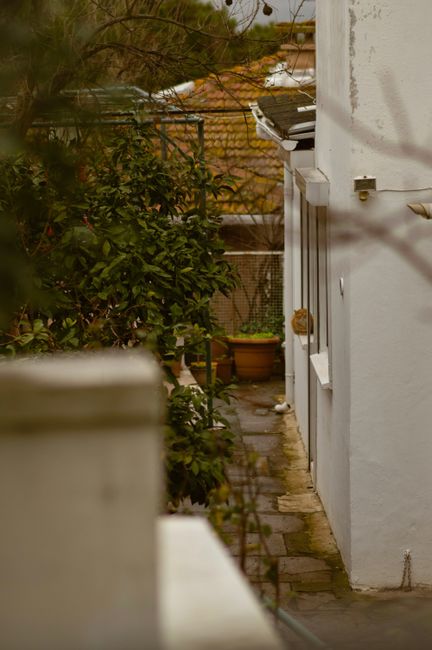
Stonebridge Estate Gardeners for Long Narrow Back Gardens
If you live with a long, narrow garden in Stonebridge, you probably know the feeling: the front end looks promising, the middle feels a bit forgotten, and the far end somehow ends up as "the bit with the bins, the mower, and one tired chair." It's a common London garden problem, and it needs more than a quick tidy-up. Stonebridge estate gardeners for long narrow back gardens understand how to turn these awkward spaces into places that feel balanced, usable, and easy to keep on top of.
Done well, a narrow garden can feel bigger, calmer, and more inviting than a square one. The trick is not stuffing it with features. It's about flow, proportion, planting that behaves itself, and maintenance that makes sense for real life. In this guide, we'll walk through what matters, how the work is usually approached, what to avoid, and how to decide whether you need light maintenance, a full redesign, or something in between. Straightforward advice, no fluff.
Why Stonebridge Estate Gardeners for Long Narrow Back Gardens Matters
Long narrow gardens are deceptively tricky. From a distance they seem simple: a rectangle, a fence on each side, maybe some lawn, maybe a path. But the shape creates problems that don't show up in wider spaces. You can end up with a corridor effect, harsh shade down one side, poor drainage at the far end, or planting that makes the space feel even tighter.
This is where local experience matters. A gardener working on an estate in Stonebridge has to think about more than pretty borders. They need to understand how light moves across the garden through the day, how the eye travels down a narrow view, and how to make each metre count. In practical terms, that means choosing layouts that stop the garden from feeling like a tunnel. It also means planning for maintenance, because a design that looks lovely in April but becomes a jungle by July is, frankly, not much use.
There's also a very real everyday side to it. Many back gardens on London estates serve multiple jobs. They might need to be safe for children, private for relaxing, tidy enough for entertaining, and easy enough to keep manageable when you've got work, school runs, and everything else going on. So the real question is not "How do we fill the space?" It's "How do we make it work without becoming another chore?"
For many households, that starts with a broader service view. If the garden has grown out of hand, a sensible first step may be garden clearance before any shaping or replanting begins. And if the goal is to keep the space looking decent through the seasons, ongoing garden maintenance is usually what prevents the whole thing from slipping back.
Practical takeaway: in a long narrow garden, every decision affects how the space feels. Good gardeners design for movement, light, and maintenance, not just appearance.
How Stonebridge Estate Gardeners for Long Narrow Back Gardens Works
The process usually starts with observation. Not glamorous, but essential. A good gardener will look at the width of the space, where the sun lands, which side gets damp, how you enter the garden, and what you actually want to do in it. Sit and read? Grow vegetables? Keep a play area? Reduce maintenance? The answers change the plan quite a lot.
From there, the garden is often broken into zones. This is one of the most useful approaches for narrow spaces because it stops everything from feeling like one long strip. A zone might be a seating area near the house, a central run of planting, and a calmer end point with a focal feature. That focal point matters more than people think. Without one, your eyes just run straight to the end fence and the garden can feel shorter as well as narrower. Bit counterintuitive, but true.
Pathways, edges, and sightlines are then used to guide movement. For example, a path that subtly curves or changes material can make a narrow garden feel less like a corridor. Raised beds may help in some situations, but not all. In a very tight space, too much bulk can crowd the route and make maintenance awkward. Sometimes the cleaner answer is slimmer borders, repeating plants, and crisp edging.
Materials are chosen with practical durability in mind. In a London setting, weather exposure, shade, and foot traffic all matter. Timber, paving, gravel, and planting all have trade-offs. If you're considering a hard landscaping element, it helps to compare what fits the garden rather than assuming the most dramatic option is the best one. For instance, some homeowners look at decking services because decking can create a useful sitting area in a narrow plot, but it should be planned carefully so it doesn't dominate the whole garden.
Where the design is more ambitious, a broader landscape gardening approach may be the right fit. That can include regrading levels, reshaping borders, improving access, or combining planting with hard surfaces. If a space needs a fuller structural rethink, landscaping may be the more appropriate route.
Key Benefits and Practical Advantages
The biggest benefit is simple: the garden starts working for you instead of against you. But there are a few more specific gains worth knowing.
- Better sense of space: smart layout, repeated planting, and clean lines can make a narrow garden feel wider and calmer.
- Improved usability: you get actual places to sit, move, and enjoy the garden, rather than just passing through it.
- Lower maintenance pressure: the right planting structure, lawn shape, and edging reduce the time spent constantly correcting problems.
- More privacy: strategic screening with hedging or taller planting can soften views from neighbours without boxing the garden in.
- Safer movement: clear routes and stable surfaces reduce trip hazards, which matters if the garden is used by children or older family members.
- Better seasonal interest: a well-planned narrow garden can have something to offer in each season instead of looking flat for most of the year.
There's another practical benefit that people sometimes overlook: a well-kept narrow garden can be easier to live with. That may sound obvious, but the emotional difference is real. You step outside, and instead of feeling a little overwhelmed, you feel relieved. That matters on a wet Tuesday evening when you just want ten quiet minutes with a cup of tea.
For ongoing upkeep, the right mix of services can make a huge difference. A tidy lawn with regular lawn mowing keeps the centre of the garden clean and open. Neat boundaries through hedge trimming help maintain shape, while careful tree lopping and removal may be needed if a canopy is stealing too much light. Not every garden needs all of this, of course. But many long narrow plots benefit from some combination of the three.
Who This Is For and When It Makes Sense
This kind of gardening support makes sense for a few different people. You might recognise yourself in one of these scenarios.
- Busy homeowners: you want a garden that looks cared for without spending every weekend on it.
- Families: you need usable space, safe surfaces, and planting that can survive real life.
- Landlords or property managers: you need a tidy, presentable garden that doesn't become a complaint magnet.
- New homeowners: you've inherited an awkward layout and want to make sense of it before investing in bigger changes.
- People planning a refresh: the garden works okay, but it feels cramped, tired, or badly divided.
It also makes sense when the garden is technically fine but emotionally annoying. That sounds odd, but it happens a lot. Maybe the lawn is too long and narrow to be useful. Maybe the rear section never gets used because it feels dark and disconnected. Or maybe every time you look out of the kitchen window you think, "We really should do something about that."
If the task is mainly to keep things neat and manageable rather than redesign everything, a regular visit schedule can be enough. If the layout is the issue, though, maintenance alone will not fix it. You'll likely need a more considered plan and, possibly, a phased approach rather than one big do-everything job on day one.
Step-by-Step Guidance
Here's a practical way to approach a long narrow back garden without getting overwhelmed. This is the part that saves time, money, and a few headaches.
- Assess the space honestly. Measure the usable width and length, note shade, damp, and access, and look at how the space is actually used now. Not how you hope it is used. What is really happening out there?
- Decide the main purpose. Do you want seating, child-friendly open space, planting, entertaining space, or easy maintenance? A garden can do more than one job, but it needs a clear lead role.
- Remove clutter and dead weight. Overgrown shrubs, broken features, and awkward leftovers can make the garden feel half its size. A proper tidy or clearance is often the clean slate you need.
- Shape the layout around movement. Paths, stepping stones, and borders should support a natural walk-through. In a narrow space, every awkward pinch point stands out.
- Choose planting that suits the scale. Repeating a few good plants usually looks better than cramming in lots of different ones. Simple can be strong.
- Use height carefully. Vertical interest can help, but too much height on both sides can close the space in. Balance is everything.
- Plan for maintenance from the beginning. If the design is hard to mow, hard to weed, or hard to reach, it will not age well. A beautiful garden that nobody can maintain is a temporary illusion.
- Set a routine. Once the structure is right, schedule mowing, pruning, edging, and seasonal checks so the garden keeps its shape.
If you're working with a professional team, it is worth discussing the whole picture rather than one isolated service. For example, a narrow garden may need both tidy borders and structural changes, which is where an integrated service page like services overview can help you understand how different tasks fit together. No drama. Just planning.
Expert Tips for Better Results
Long narrow gardens reward restraint. That's the first tip, and maybe the most useful one. A lot of people try to solve the problem by adding more stuff. More pots. More feature stones. More odd little ornaments. It rarely works.
Here are a few better moves.
- Repeat materials and plant forms. Consistency helps the eye travel smoothly down the garden.
- Keep the centre visually open. If you want the space to feel wider, avoid overloading the middle with bulky features.
- Use lighting thoughtfully. Low-level or directional lighting can make the garden feel usable later in the day without being harsh.
- Keep edges clean. Sharp edging does a surprising amount of work in a narrow plot.
- Mix evergreen structure with seasonal softness. You need a backbone that looks good in winter and some colour for the growing season.
- Watch the far end of the garden. This is often where neglect shows first. It's also where a focal point can do a lot of good.
A small but useful detail: choose plants and materials that you can actually reach. In narrow spaces, maintenance access is often more important than people think. If you can only tend a bed by leaning over it awkwardly, you'll stop doing it. Happens all the time. Gardening should not feel like a low-level gymnastics event.
If privacy is a concern, consider layered screening instead of a solid wall of dense growth. A few taller elements, placed well, usually feel softer and more elegant than a heavy screen on both sides. And if the garden is heavily shaded by existing trees, the answer may include selective pruning or, where necessary, tree lopping and removal carried out with care and judgment.
Common Mistakes to Avoid
Let's face it, narrow gardens make even sensible people do slightly odd things. These are the mistakes that most often cause regret later.
- Overcrowding the layout: too many features make the garden feel smaller, not richer.
- Using one long straight strip of lawn without structure: it can look flat and uninteresting, especially in a tight plot.
- Choosing oversized furniture: a chunky set may be comfortable indoors, but outdoors it can swallow the whole garden.
- Ignoring shade patterns: what looks fine in spring may become a damp, gloomy patch by late summer.
- Making maintenance difficult: if you can't mow, weed, or prune comfortably, the space will quickly decline.
- Planting only for instant impact: the garden may look busy at first and then feel chaotic later.
- Forgetting drainage: narrow plots can develop wet spots, especially if hard surfaces are added without proper planning.
One more thing: don't let the "end fence problem" go unaddressed. In a long garden, the far end often becomes the most neglected section because it is furthest from the house and hardest to see. That's exactly why it needs attention. A simple bench, climber, or framed planting area can completely change the feel. Simple, but effective.
Tools, Resources and Recommendations
You don't need a shed full of specialist gear to keep a long narrow garden in good shape, but the right tools do make life easier.
| Need | Useful approach | Why it helps in a narrow garden |
|---|---|---|
| Grass upkeep | Compact mower or regular professional mowing | Easier to manoeuvre in tight passages and around edges |
| Boundary control | Precision hedge trimming and pruning | Stops the garden feeling cramped and uneven |
| Heavy overgrowth | Clearance before redesign | Gives a clean starting point and reveals the real layout |
| Structural improvements | Decking or hard landscaping | Creates defined zones without using excessive space |
| Ongoing upkeep | Seasonal maintenance plan | Keeps the design from drifting out of shape |
When choosing support, it helps to think in layers. Some jobs are one-off, some are seasonal, and some need regular attention. A well-balanced plan might combine lawn mowing for the open area, hedge trimming for structure, and occasional deeper work to keep the whole garden honest.
If the garden has become hard to manage, do not be afraid to start with the basics. The fanciest design in the world will not help if you can't see the borders because of overgrowth. Clear first, plan second. It's boring advice, maybe, but it works.
Law, Compliance, Standards, or Best Practice
For most domestic gardens, the main concern is not red tape. It is safe, sensible practice. That said, there are a few important points to keep in mind.
Any work involving trees, heavy cutting, access routes, or waste removal should be handled with care. If there is a shared boundary, nearby structures, or a protected tree issue, it's wise to take a cautious approach and get proper advice before cutting back aggressively. A good gardener will not promise a quick fix that creates a later problem.
Health and safety also matters in small spaces. Narrow access can make tool handling, waste movement, and slippery surfaces more awkward, especially in wet weather. Responsible teams should work in a way that reduces risk to people, neighbours, and property. If you want to understand how a provider approaches this side of things, it is reasonable to review pages such as health and safety policy and insurance and safety before booking any substantial work.
There is also a sustainability angle. Garden waste should be handled responsibly, with as much recycling and reuse as practical. That might mean composting suitable green waste, separating materials, or planning works in a way that reduces unnecessary disposal. A team that takes this seriously will usually be more careful elsewhere too. Not always, but often enough to matter.
Finally, if you are comparing providers, clear pricing and written expectations are your friend. Ask how quotes are structured, what is included, and whether the work is a one-off or a repeat service. A transparent approach usually saves everyone time. You can also look at the company's pricing and quotes page to understand how estimates are handled.
Options, Methods, or Comparison Table
Not every long narrow garden needs the same solution. Some need a light tidy and smarter planting. Others need a proper redesign. Here's a simple comparison to help you think it through.
| Approach | Best for | Pros | Watch-outs |
|---|---|---|---|
| Routine maintenance only | Garden already has a decent layout | Affordable, fast, keeps things neat | Won't solve poor structure or awkward flow |
| Selective refresh | Space is usable but tired | Good balance of improvement and cost | Needs a clear plan so changes feel coherent |
| Hard landscaping focus | Need seating, access, or stronger structure | Creates shape and definition | Can feel rigid if overdone in a narrow space |
| Full landscape redesign | Layout is fundamentally wrong | Best chance of transforming how the garden works | More planning, more disruption, usually more cost |
In truth, many Stonebridge gardens end up somewhere between the first and second option. That's not a compromise in a bad way. It's often the smartest answer. A modest redesign with good planting and disciplined maintenance can outperform a showy rebuild that nobody enjoys living with.
Case Study or Real-World Example
Imagine a typical long narrow back garden behind a terraced home. The lawn runs straight from the patio to the end fence, but the centre is patchy, the side borders have sprawled, and the back corner is gloomy under a mature tree. The owners say they hardly use it, except to put the bins out and drag the washing line in and out when it rains. Very familiar story.
A practical response would start by clearing dead growth and cutting back the borders. That immediately reveals the real shape of the space. Next, the long central strip might be shortened slightly so the garden feels less like a runway and more like a set of usable zones. A small seating area close to the house gives the space an obvious social function, while the far end could be softened with layered planting and a simple focal point. If the tree canopy is too dense, careful reduction can improve light, though only where appropriate and justified.
After that, a maintenance routine keeps it from slipping back. The lawn is cut regularly, edges are defined, and the taller planting is trimmed at the right time of year. Nothing dramatic, just consistent care. The owners may not end up with a massive garden, but they do get a better one. More light, more structure, less hassle. And yes, that usually changes how often the back door gets opened.
Practical Checklist
Use this checklist before starting any work on a long narrow garden in Stonebridge.
- Measure the garden accurately, including any awkward narrowing points.
- Note where the sun, shade, and damp patches appear during the day.
- Decide what the garden must do: seating, play, planting, access, or low maintenance.
- Remove clutter, dead plants, and anything that blocks the flow of the space.
- Keep the central route open and easy to walk through.
- Choose a small number of materials and repeat them for visual calm.
- Use planting that fits the scale and does not overhang the path too much.
- Check whether the garden needs mowing, hedge work, or tree adjustments before design work begins.
- Plan for future maintenance now, not later.
- Ask for a written quote that explains what is included and what is not.
If you can tick most of those off, you are already ahead of the game. If not, don't worry. That just means the job needs a bit more planning, which is normal enough.
Conclusion
Long narrow back gardens can be awkward, yes, but they are far from hopeless. With the right layout, proportion, planting, and maintenance, they can become some of the nicest outdoor spaces on the street. The real skill is not forcing the garden to be something it is not. It is reading the shape properly and making every part earn its place.
For Stonebridge homeowners, that often means starting with a clear-eyed assessment, then choosing between maintenance, selective improvement, or a fuller redesign. Keep the flow open, keep the planting disciplined, and do not underestimate the value of regular care. Small improvements, done well, can change the whole feel of the space. That's the quiet magic of it, really.
When you are ready to turn an awkward strip into a garden you actually want to use, working with experienced local help can make the whole process feel a lot less stressful and a lot more rewarding.
Get a free quote today and see how much you can save.
And if all you want for now is a garden that looks a little less tired on a Friday evening, that is a perfectly good place to start.
Frequently Asked Questions
What makes long narrow back gardens difficult to design?
The shape creates a corridor effect, limits movement, and can make the garden feel smaller than it is. Light, access, and balance all become more important than in wider spaces.
Do Stonebridge estate gardeners work on very small narrow gardens too?
Yes, the same principles often apply. Small and narrow spaces both need careful zoning, tidy edges, and planting that suits the available width.
Is a lawn a good idea in a long narrow garden?
It can be, but only if the lawn shape feels proportionate and easy to maintain. In some gardens, a smaller lawn with more planting and hard landscaping works better.
How do you make a narrow garden look wider?
Use repeated materials, keep the centre visually open, avoid clutter, and create a focal point at the end. Gentle curves and layered planting can also help.
What is the best first step if the garden is overgrown?
Start with clearance and a proper tidy-up. Once you can see the structure again, it becomes much easier to decide what should stay and what should change.
How often should a narrow garden be maintained?
That depends on planting, lawn size, and season, but narrow gardens usually benefit from regular attention because small issues show quickly in tight spaces.
Can decking work in a narrow back garden?
Yes, if it is sized carefully and does not overwhelm the space. A compact deck can create a useful seating zone near the house.
What plants work best in a long narrow garden?
Usually a mix of compact shrubs, repeated perennials, and a few evergreen structural plants. The best choice depends on light levels and how much maintenance you want.
Should I worry about trees shading the garden too much?
If the garden is noticeably dark, yes. Careful tree work may improve light, but any pruning or removal should be considered properly and carried out safely.
How do I choose between maintenance and redesign?
If the garden layout already works, maintenance may be enough. If the shape feels awkward or unusable, a redesign or selective landscaping is probably the better route.
Is there a way to make the far end of the garden more useful?
Absolutely. A bench, focal planting, a small feature, or a change in surface can draw the eye and give the end of the garden a proper purpose.
How do I know whether a quote is fair?
Look for clear scope, included tasks, access assumptions, and any maintenance follow-up. A good quote should be easy to understand, not vague or padded.